Non-show days
Nessebar Old Town
A walled peninsula town with three thousand years of layered history, reachable and back from the arena side of Burgas in an afternoon. The strongest single option for the two days between shows.
The short version
Nessebar Old Town is a UNESCO World Heritage peninsula settlement about ~ 33 km , a 35 to 45 minute drive, from the arena side of Burgas. No cars inside it: you walk in across a causeway.
It is also the page the hub points to for the two days in contest week with no show, because it is the one place on this coast that rewards a visit whatever the weather is doing.
Eurovision 2027 in Burgas — get updates and first access to prices.
Rooms, arena transport and ticket news, straight to your inbox. No spam, unsubscribe any time.
What Nessebar Old Town is
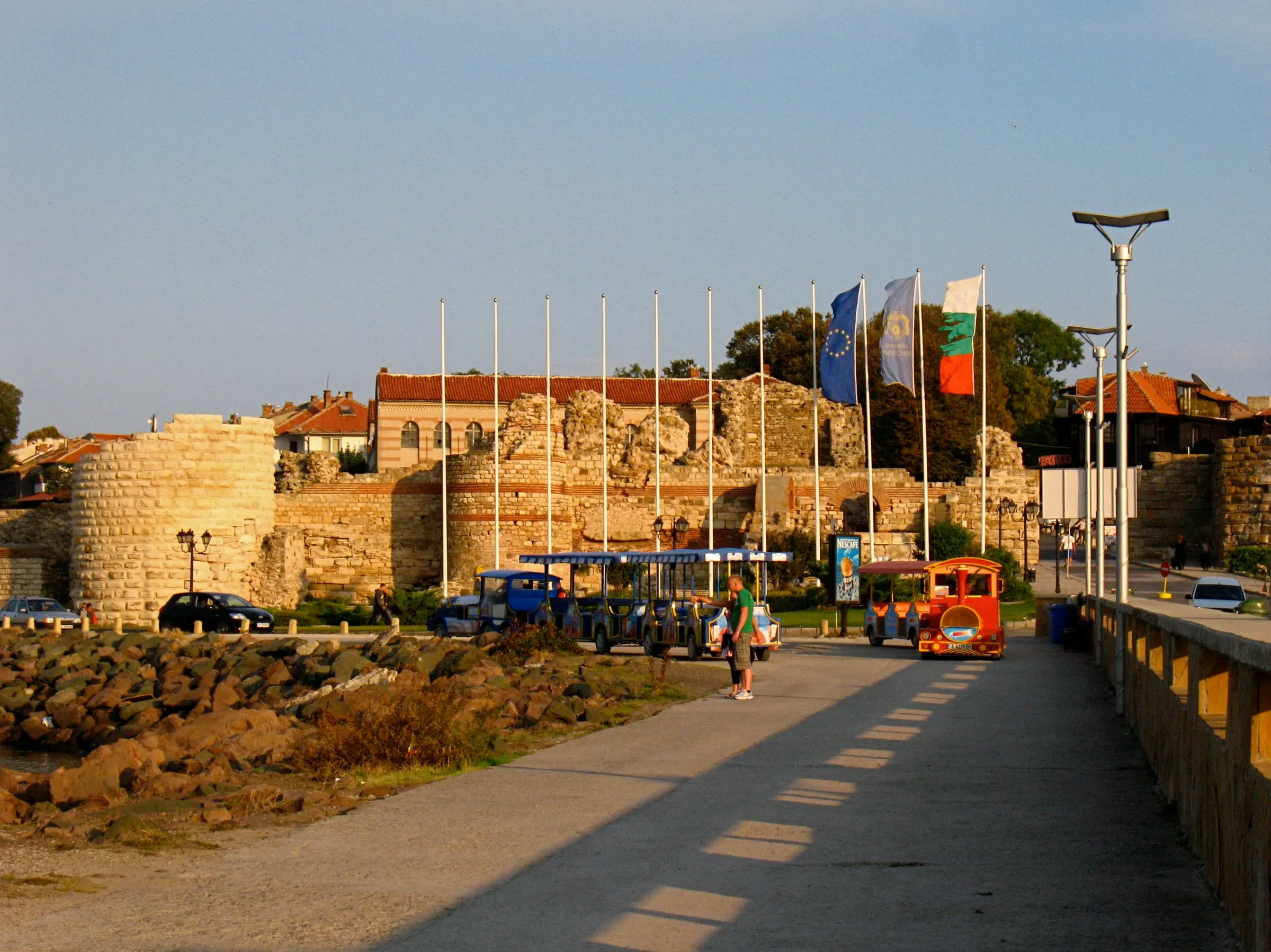
Nessebar Old Town occupies a rocky peninsula on the Black Sea coast, joined to the modern town by a narrow causeway. The site was inscribed on the UNESCO World Heritage list in 1983 for the density of history preserved on such a small footprint, not for any single monument.

Getting there from Burgas and the arena side
Nessebar sits ~ 33 km up the coast from Burgas, a 35 to 45 minute drive off-peak. From Burgas Airport it is ~ 25 km , about 25 to 35 minute .
| From | Distance | By car |
|---|---|---|
| Burgas (arena side) | ~ 33 km | 35 to 45 min |
| Burgas Airport | ~ 25 km | 25 to 35 min |
Coming from Sunny Beach the old town is close enough to be a short taxi or a walk from the resort end of the strip. Coming from Burgas itself, it is the same run described on Burgas Airport to Nessebar, just starting from the city rather than the runway.
What is layered into the old town
The peninsula has been settled continuously since a Thracian community first built there. Greek colonists from Megara refounded it as Mesambria around the 6th century BC, and the street plan inside the walls still follows their original layout. Roman rule followed, then the town spent over a thousand years inside the Byzantine and later Bulgarian medieval world, which is where most of what a visitor actually sees comes from.
| Period | What survives |
|---|---|
| Thracian and Greek (Mesambria) | Fortification remains and the underlying street layout inside the walls. |
| Roman | Fragments of baths and fortification incorporated into later building. |
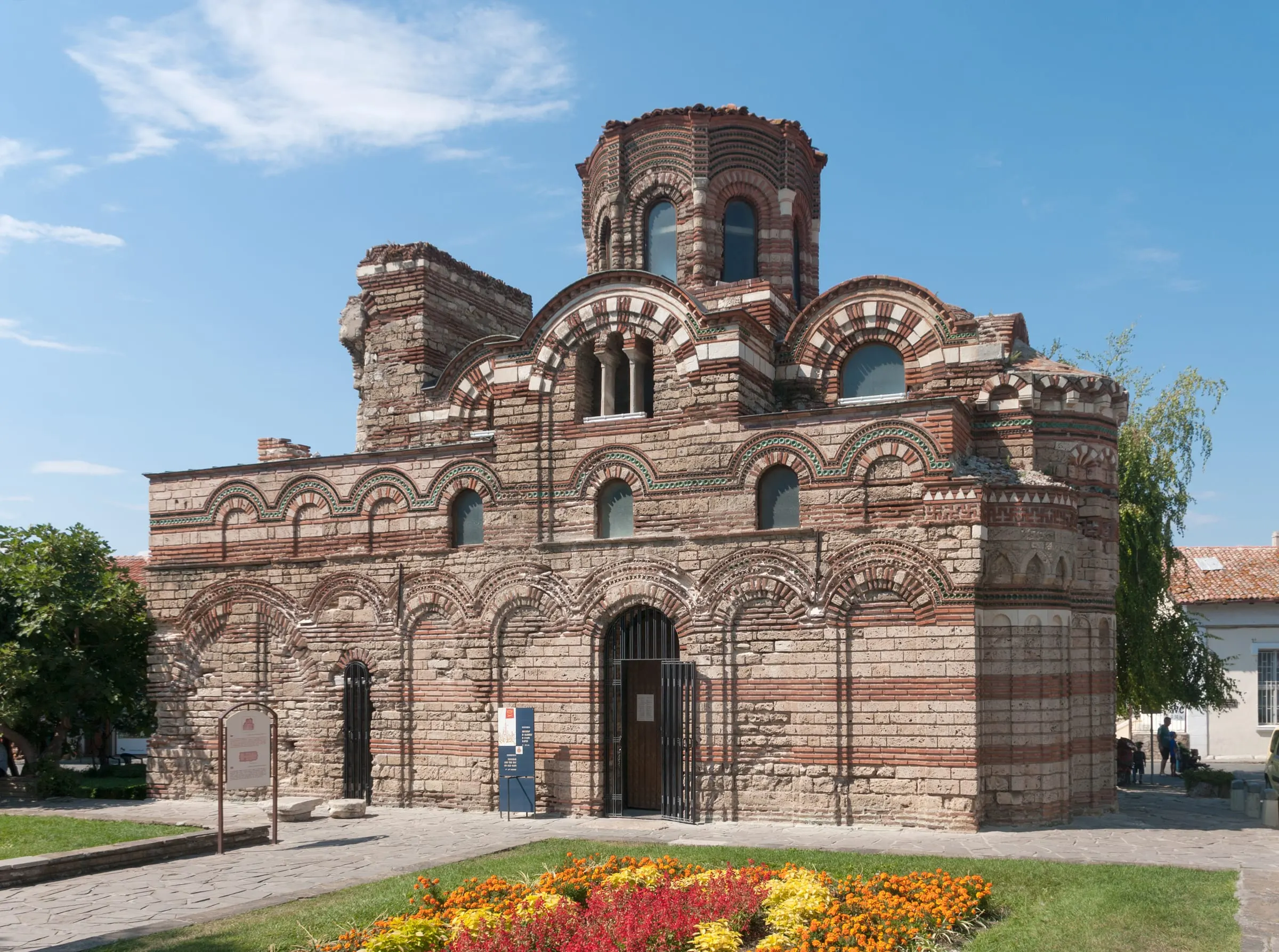
| Byzantine and medieval | A notable concentration of small brick and stone churches, several roofless, built in the distinctive banded Byzantine style of the coast. |
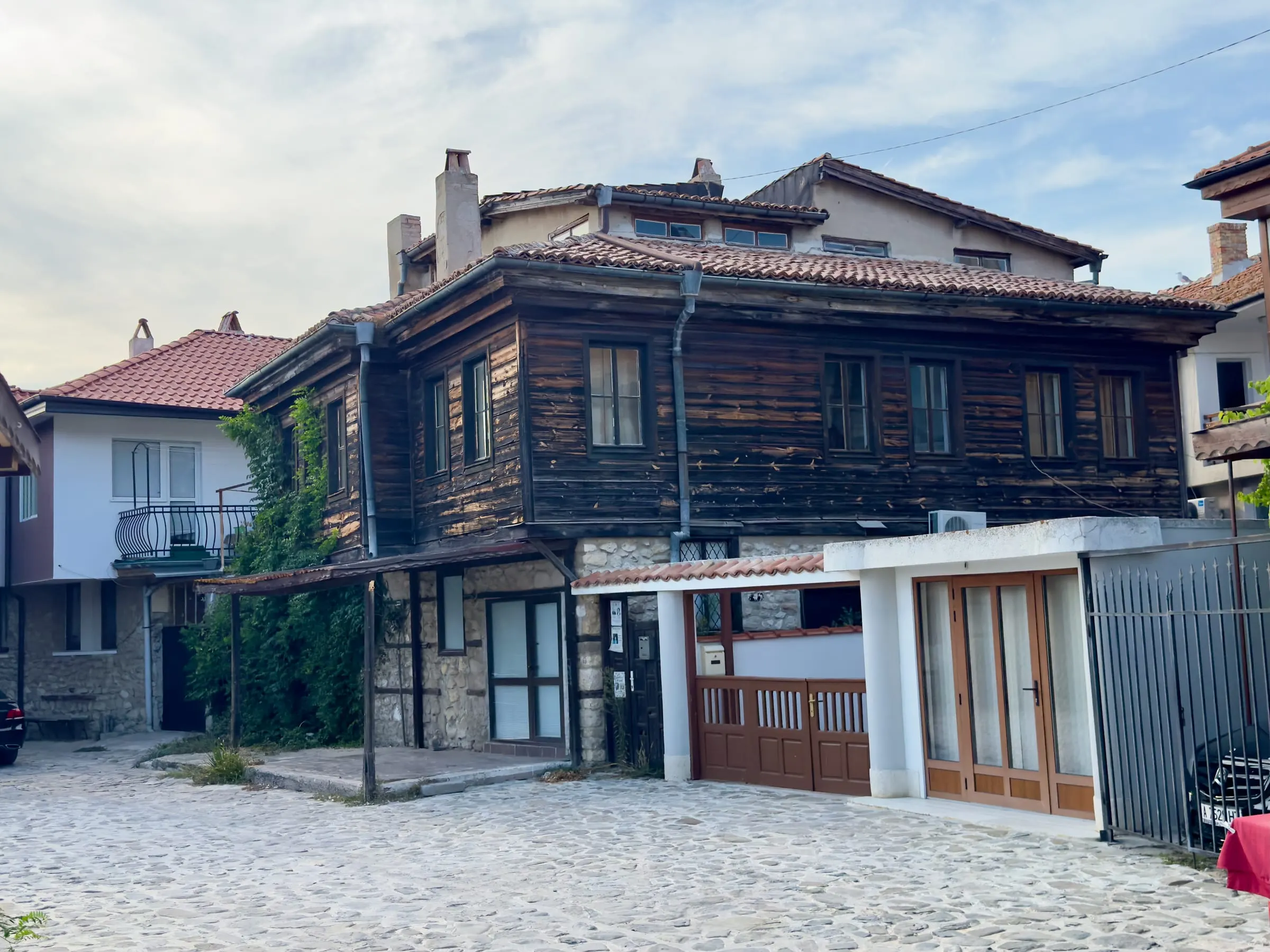
| National Revival, 18th and 19th century | Timber-framed wooden houses with overhanging upper storeys, still lived in along the lanes. |
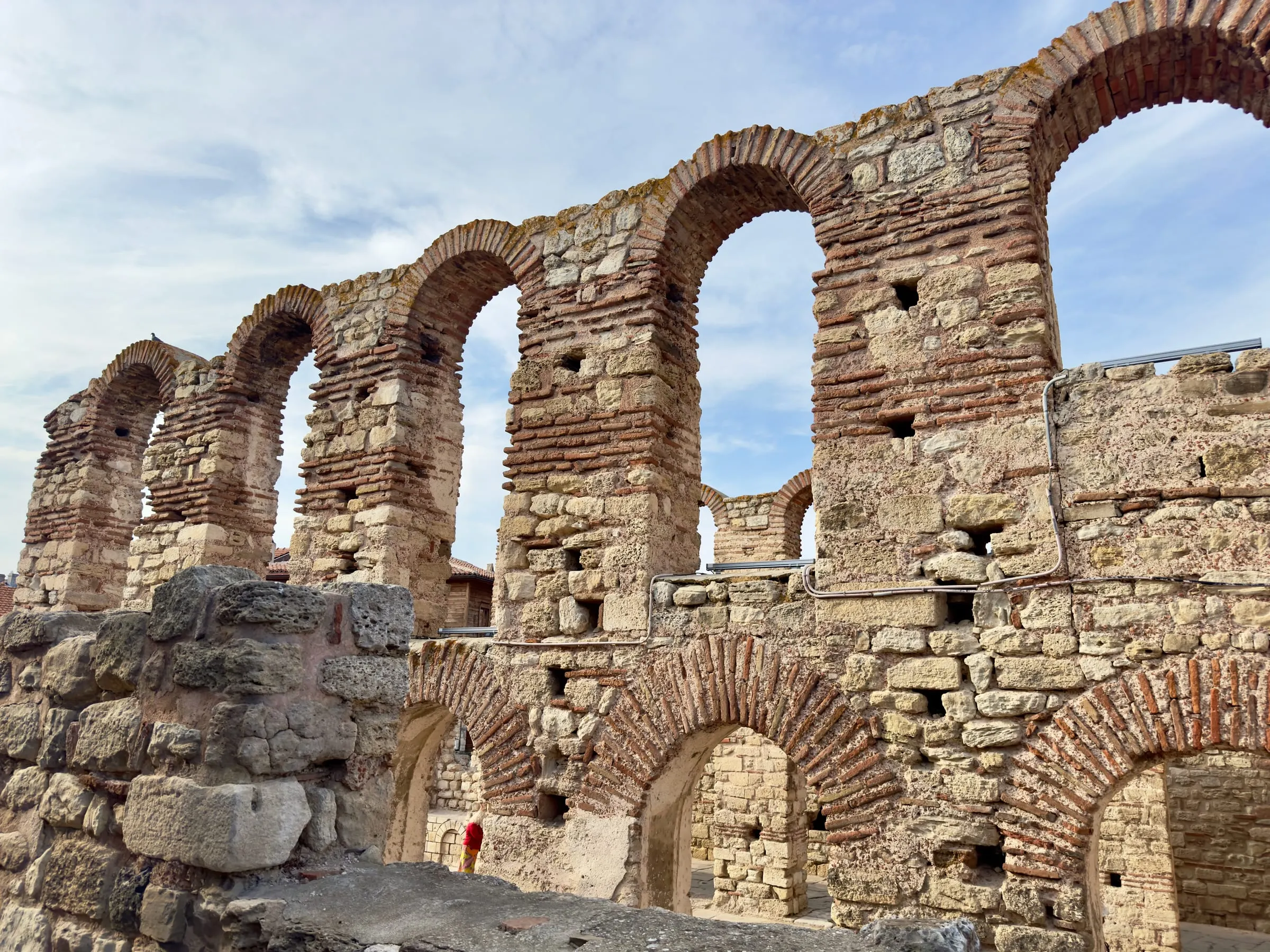

None of the churches functions as an active parish today in the way a visitor might expect. Most are shells or small museum spaces, and that is the point of the UNESCO listing: it is the concentration and the layering that is unusual, not any one building on its own.

Walking it: cobbles, causeway, no cars
Vehicles do not enter the old town. You park on the new-town side and walk across the causeway, then continue on foot on cobbled and stone lanes for the rest of the visit.
Wear flat shoes. The lanes are old stone and worn cobble, uneven in places, and there is no vehicle access to fall back on if a wheeled bag or unsuitable shoes become a problem partway round. A pushchair or a wheelchair will manage the main lanes but not all of the side streets.

When to go, and eating on the water
Coach parties tend to arrive mid-morning and thin out by late afternoon, so the quietest windows are early morning and evening, when the light on the stone is also better. Early May is already calmer than the July and August crowds most photos of Nessebar show.
Using it as a non-show day
Eurovision 2027 leaves two confirmed days in contest week without a show, 12 and 14 May. Nessebar Old Town is the option we would use first: near enough for an easy day trip, indoors and outdoors both available if the weather turns, and not dependent on the sea being warm enough to swim in.
The full plan for both free days, including Burgas itself and Sozopol further south, is on non-show days. If you are staying on the coast and want a base within walking distance of the old town, see staying in Nessebar.
Common questions
- Is Nessebar Old Town a UNESCO World Heritage site?
- Yes. The ancient town of Nessebar was inscribed on the UNESCO World Heritage list in 1983, for the concentration of historic layers on one small peninsula: Thracian, Greek, Roman and Byzantine.
- How far is Nessebar Old Town from Burgas?
- About 33 km by road, a 35 to 45 minute drive to the arena side of Burgas off-peak. From Burgas Airport it is closer, roughly 25 km.
- Can you drive into Nessebar Old Town?
- No. The old town sits on a peninsula joined to the mainland by a narrow causeway, and vehicles do not enter it. You park on the new-town side and walk in.
- How much time do you need in Nessebar Old Town?
- Half a day covers the churches, the lanes and a meal comfortably. A full day allows an unhurried pace and time to sit down away from the busiest hour.
- Is Nessebar Old Town a good choice for a Eurovision non-show day?
- Yes. It is close enough to the arena side of Burgas for an easy round trip in a day, does not depend on beach weather, and is genuinely quiet outside the mid-morning coach window.